


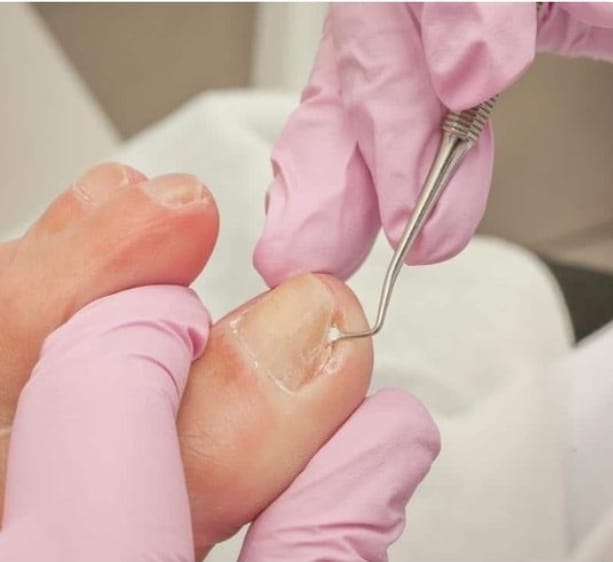
What is an ingrown toenail?
An ingrown toenail is a common health problem where a corner or side of the toenail of the big toe grows into the soft skin of the foot, causing pain and inflammation. In severe cases, it can become infected.
In most cases, ingrown toenails do not require specialized medical consultation. However, if the pain is severe or you notice an infection, it is essential to see your doctor.
Diabetic patients also require special attention if they develop an ingrown toenail, as they are more prone to complications.
Causes of an ingrown toenail
Causes of an ingrown toenail include:
Wearing shoes that put pressure on the toenails.
Cutting toenails too short or unevenly.
Injury to the toenail.
Having severely curved toenails.
Nail infections. Symptoms of an Ingrown Toenail
If you have an ingrown toenail, you may experience persistent pain and sensitivity to touch, along with redness, swelling, and inflammation spreading to the surrounding skin.
In some cases, an infection can develop, with symptoms including:
Pus or fluid draining from the wound around the toe.
Fever or pain in the toe.
Bleeding around the toenail.
Redness and warmth of the skin around the toenail.
Symptoms worsen over time instead of improving.
Complications of an Ingrown Toenail
Complications can occur, especially in people with diabetes. This chronic disease can damage the nerves in the feet and impair blood flow to the extremities, resulting in poor wound healing and an increased risk of infection.
Factors that increase the risk of developing an ingrown toenail
Several factors increase the risk of developing an ingrown toenail, the most important of which are:
Being a teenager, when feet tend to sweat more, which softens the nail and skin.
Having nail care habits that encourage the nail to grow into the skin, such as cutting nails too short or rounding the corners.
Not taking good care of your nails.
Wearing shoes that are too tight on the toes.
Activities that put the toes at risk of injury, such as running or kicking.
Certain chronic diseases, such as diabetes, which reduce blood flow to the extremities.
Diagnosing an Ingrown Toenail
An ingrown toenail can be easily diagnosed by a healthcare professional by listening to your symptoms and performing a physical examination of the foot.
Medical Treatment for Ingrown Toenails
Follow these tips if you have an ingrown toenail:
Soak your feet in warm water for 15 to 20 minutes, 3 to 4 times a day. Use a cotton swab to gently push back the cuticle at the corner of the nail.
Repeat this for several weeks and allow the toenail to grow out.
After a while, when the tip of the nail has grown forward, you can place a very small piece of cotton or dental floss under the toenail at the edges to help it grow over the skin.
Be sure to change the cotton or dental floss each time you soak your feet.
Do not pick at the toenail or try to remove it yourself.
When Does an Ingrown Toenail Require Surgery?
You should see a doctor for treatment of an ingrown toenail if you notice any signs of infection, as this may indicate an abscess that requires surgical intervention.
In cases of inflammation, part of the nail can be removed by numbing the toe and removing the ingrown portion. It may take 2 to 4 months for the nail to grow back.
If the problem recurs in the same toe, the doctor may remove part of the nail along with the underlying tissue under local anesthesia. However, this procedure may prevent that part of the nail from growing back.
An infected nail may require antibiotic treatment. Your doctor or podiatrist may need to drain any pus.
After nail removal, we advise the following:
Take pain medication as needed.
Apply warm compresses for a few minutes for a few days until the swelling decreases.
Rest and elevate the toe for 12 to 24 hours.
Avoid activities that hurt your toe.
Do not swim or use a hot tub until advised by your doctor.
Preventing Ingrown Toenails:
Cut your toenails straight across. Do not curl them to conform to the shape of your toe.
Keep your toenails at a moderate length, ideally level with your fingertips. Toenails that are too short can experience pressure from shoes, potentially causing them to grow into the surrounding tissue.
Wear properly fitting shoes. Shoes that compress your toes can cause ingrown toenails.
Wear protective footwear if you are prone to toe injuries.
If you have diabetes, check your feet daily for signs of ingrown toenails or other foot problems.