


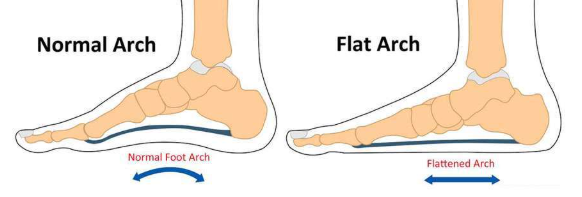
Pes Planus (Flat Feet)
Pes planus, commonly known as flat feet, is a condition in which one or both feet have little or no visible arch. Some people are born with flat feet, while others develop the condition later in life as a result of injury, aging, or certain medical conditions.
Although babies are naturally born with flat feet, the arches of the feet usually develop as they begin walking. If the arches fail to form or collapse after they have developed, flat feet may lead to pain, altered walking patterns, and other musculoskeletal problems.
Why Are Foot Arches Important?
The arches of the feet are essential for normal walking and movement. They help distribute body weight efficiently and provide stability and flexibility during movement. Their key functions include:
- Absorbing shock during walking and running.
- Acting like a spring to store and release energy with each step.
- Adapting the foot to uneven surfaces.
- Supporting balance and stability.
- Protecting the nerves and blood vessels on the sole of the foot.
Types of Flat Feet
Healthcare providers classify flat feet based on their flexibility and the underlying cause.
Flexible Flat Foot
This is the most common type. The arch is visible when the foot is not bearing weight but disappears when standing. Flexible flat feet are often painless, although some individuals may experience discomfort with prolonged activity.
Rigid Flat Foot
In rigid flat feet, the arch is absent whether standing or sitting. The foot is stiff, and movement is limited. This uncommon type is more likely to cause pain and functional limitations.
Congenital Flat Foot
Congenital flat feet are present at birth. They may result from inherited conditions, developmental abnormalities, or connective tissue disorders that prevent normal arch formation.
Acquired Flat Foot (Fallen Arches)
Also called progressive collapsing foot deformity, acquired flat foot develops after the arches have formed normally. It most commonly occurs in adulthood and is often associated with tendon dysfunction, injury, arthritis, or other medical conditions.
Signs and Symptoms
Not everyone with flat feet experiences symptoms. However, changes in foot alignment can place excessive stress on the feet and lower limbs, leading to discomfort and altered biomechanics.
Early Symptoms
- Foot pain, especially after walking or prolonged standing.
- Ankle pain caused by excessive inward rolling of the foot (overpronation).
- Shin pain or shin splints due to altered walking mechanics.
Long-Term Problems
If left untreated, flat feet may contribute to:
- Abnormal gait or walking pattern.
- Foot deformities, such as bunions or hammertoes.
- Persistent foot pain, even at rest.
- Pain in the knees, hips, or lower back.
- Recurrent overuse injuries.
- Chronic ankle instability and frequent sprains.
- Arthritis of the foot and ankle.
Causes of Flat Feet
Flat feet may be congenital (present at birth) or acquired (developing later in life).
Congenital Causes
Some individuals inherit naturally low arches, while others have genetic or developmental conditions that interfere with normal arch formation. These include:
- Cerebral palsy
- Clubfoot
- Down syndrome
- Ehlers-Danlos syndrome
- Joint hypermobility syndrome
- Marfan syndrome
- Osteogenesis imperfecta
- Tarsal coalition
Causes of Acquired Flat Feet
Acquired flat feet occur when the arch gradually or suddenly collapses after normal development. Common causes include:
Posterior tibial tendon dysfunction (PTTD): The most common cause of adult-acquired flatfoot. Damage or degeneration of the posterior tibial tendon reduces support for the arch, leading to progressive collapse.
Charcot foot: A complication of diabetes-related nerve damage that weakens the bones and ligaments of the foot, resulting in deformity and loss of the arch.
Arthritis: Both degenerative and inflammatory arthritis can damage the joints of the foot, altering its alignment and contributing to arch collapse.
Trauma: Fractures, ligament injuries, or prolonged immobilization after injury may weaken the structures that support the arch, eventually leading to flat feet.